Automatic Gates in Mulgoa
Automatic Gates Mulgoa, Built for Acreage Entries
Mulgoa is a scenic valley of large landholdings, horse properties and houses set well back from the road, and on a block like that an automatic gate stops being a convenience and becomes the way the entrance works. Penrith Automatic Gates builds wide sliding and cantilever leaves for rural frontages, with a cantilever specified wherever the drive is unsealed because gravel in a ground rail is the most reliable way to destroy a tracked gate. Posts and footings are sized for a bending moment rather than a weight, infills are specified so a hoof or a leg cannot pass through or be trapped, and where the gate sits a few hundred metres from the switchboard a solar array and battery are sized to the shortest days of the year rather than the annual average.
GET A FREE QUOTE
OUR STORY
Automatic Gates Mulgoa: Driveway, Sliding and Cantilever Gate Installation
Mulgoa is one of the Penrith area's most established rural suburbs, a scenic valley of large landholdings, horse properties and houses set well back from the road. On a block like that an automatic gate stops being a convenience and becomes the way the entrance works, because a long, heavy rural gate is a genuine chore to open by hand every time anyone comes or goes, and in wet weather it is worse.
Wide spans and why a sliding leaf wins
Rural frontages are wide, and width is what rules out a swing gate first. A swing leaf is a cantilever hinged at one end, so every extra metre applies its weight further from the hinge and multiplies the load there; past a moderate span a single leaf sags and a double leaf means two operators, two sets of safety devices and sequencing between them. A sliding leaf closes the same opening with one operator and one drive, needs no clear arc, and does not care what the driveway does behind the gate line. What it needs is a clear run alongside the fence roughly as long as the gate is wide, which on a Mulgoa frontage is usually the one thing there is plenty of. Detail is on the automatic sliding gates page.
Cantilever gates where nothing should touch the ground
A cantilever leaf is carried entirely on posts set back from the opening and crosses the driveway with nothing touching the ground. On an unsealed or part-sealed rural entry that is decisive, because a ground rail on gravel is a channel waiting to fill. It also suits the sloping driveways common through the valley, since the leaf is independent of the ground profile. The cost sits in the posts rather than the leaf: a cantilever needs a counterbalance run beside the opening around half again the width of the gap, and footings sized for a bending moment rather than a vertical load.
Swing gates where the ground is level
A swing gate is still the right answer on the narrower Mulgoa entries where the ground is level through the leaf's whole arc and there is clear space behind the opening. It is the cheapest automated configuration, has the fewest moving parts, needs no rail and no counterbalance run, and on a frontage with established brick piers a pair of leaves meeting in the middle often looks right where a single sliding panel does not. A drop bolt into a centre stop holds the pair firmly, which matters where stock press against a gate. Detail is on the automatic swing gates page, and the broader entry decision on the driveway gates page.
What an automatic gate costs in Mulgoa
No figure is honest before the entry is measured, and on acreage the groundwork and the power arrangement vary far more than the gate. From least to most: a swing leaf on a narrow level entry; a tracked sliding gate where the apron at the gate line is sealed and sound; a cantilever leaf, where the counterbalance and the deeper, wider footings add most of the difference; a wide cantilever with a solid or screening infill, which adds material and forces heavier posts again; and at the top any of those on a remote entry needing a solar array and battery bank sized to the cycle count. The two factors that move a Mulgoa quote most are the surface at the gate line and the distance to power. Quotes follow a free on-site measure and are itemised so the gate, the automation, the posts and any power works can be staged.
SERVICES WE OFFER IN Mulgoa
Electric Gates Mulgoa: Aluminium, Steel and Timber Leaves
Electric gates and automatic gates are the same thing described two ways. What genuinely differs between two Mulgoa quotes is the leaf: its material sets the weight, the weight sets the operator, and both set how the gate behaves in ten years.
Aluminium for a lighter leaf
Aluminium weighs roughly a third of what the same steel section weighs, and on a long rural leaf that compounds. A lighter gate loads its wheels, carriage, posts and operator far less, which means a smaller motor, a smaller battery and, on a solar entry, a noticeably smaller array. It never rusts, so there is no finish to maintain on a gate at the end of a long driveway that nobody inspects. The limit is rigidity: aluminium is less stiff for a given section, so a long leaf needs a deeper frame and more internal bracing or it flexes, and flex on an automated gate trips obstruction detection. Built with the right section it is the sensible default on most Mulgoa entries. More on aluminium gates.
Steel for a wide or ornamental entry
Steel is stiffer, so it holds the widest spans straight where aluminium would need an impractically deep frame, and it resists impact from vehicles, trailers and machinery rather than denting. It also carries the ornamental work that a formal rural entrance often calls for, and it can be cut, re-squared and repaired by welding for its whole life. Its requirement is a maintained finish, and in a damp valley with stock and dust that means hot-dip galvanising before powder coating rather than a coating alone. More on steel and wrought iron gates.
Timber and timber-look on a rural frontage
Timber suits a rural entrance better than anywhere else and is frequently what an owner wants. The honest caution is that a timber frame on a long leaf will sag and move with the weather, and a sagging gate destroys its hinges and then its operator, so timber is built as battens fixed to an aluminium or steel frame rather than as a timber frame. That keeps the appearance with a leaf that stays square and carries the operator's load properly. Timber-look powder coats and woodgrain finishes are the lower-maintenance alternative and hold their appearance without oiling.
Privacy and security gates on a rural frontage
Screening a long frontage is a common request, and it has a direct engineering cost that is easy to underestimate. A solid or closely spaced infill behaves like a sail, and on an exposed valley entry a gust can briefly demand far more force than the gate's static weight suggests, which trips obstruction detection, loads the posts and strains the operator. So where screening is wanted the posts, footings and operator class are all sized up for the wind rather than the weight. Spaced horizontal slats screen from the road at an angle while letting wind through and are usually the better compromise. Where security rather than privacy is the driver, the leaf is specified to resist being forced or climbed, and the entry method is made withdrawable from one person without re-keying the property, which does more for real security on an isolated block than extra height.
Why choose us in Mulgoa
Gate Repairs and Servicing in Mulgoa
Rural gates work harder than suburban ones and sit further from anyone's attention, so a good share of the Mulgoa work is repair. Repairs are carried out on any brand, including gates installed by someone else and operators whose maker no longer supports them.
Gate motor and opener repairs
On acreage the diagnosis usually starts with power rather than the motor. A flat battery bank on a solar installation is the single most common cause here, and it most often traces back to a panel shaded by growth that was not there when the gate went in, which is fixed by relocating the panel rather than replacing the operator. Beyond that, control boards fail from water ingress through a perished housing seal and from ants and insects nesting on the board, both far more common on a rural entry than owners expect. A gate that opens but will not close is almost always the safety system working as intended, with a photocell lens coated in dust or a beam knocked out of alignment by stock or a vehicle. On sliding gates the rack is a wearing part, and a chewed rack from mesh set too loose will eventually jam the gate. The fault is diagnosed on site before anything is quoted.
Emergency call-outs when a gate is stuck
On a property with one long driveway, a gate stuck closed is a genuine problem rather than an inconvenience, and a gate stuck open leaves stock and plant unsecured. Both are treated as urgent, and the first thing done on the phone is to talk the owner through the manual release, because every compliant gate has one and knowing where it is means nobody is waiting on a van to get a vehicle out. Where a part is needed that is not on the van, the gate is left secure, safe and manually operable rather than half dismantled. Full detail is on the gate repairs, servicing and emergency page.
What a service visit covers on a rural gate
Servicing follows use and conditions rather than the calendar, and a rural gate on gravel with stock and dust needs a shorter interval than a suburban gate on the same cycle count, because the rail, the rollers and the photocells all foul faster. A visit clears and inspects the rail, checks rollers and bearings for flat spots and play, checks hinges for drop and re-shims them, and runs the gate by hand to feel for binding before it is run under power. The operator mounting is tightened, the gearbox checked for play and leaks, and the rack and pinion mesh reset, since that mesh decides how long a sliding drive lasts. The control enclosure is opened and checked for water ingress and insect nesting, terminals are checked, and the battery is load-tested rather than merely voltage-checked. On a solar entry the panel output is measured and the shading reassessed, because growth is the thing that changes between visits. Every safety device is triggered and the force limiting measured and reset. The visit ends with a written note of what was adjusted and what is wearing, which is what lets an owner budget instead of being surprised.
SERVICES WE OFFER IN Mulgoa
Gates Built for Mulgoa Acreage, Gravel and Unsealed Drives
Two conditions dominate rural gate work in this valley, and both are about the ground rather than the gate. That is the opposite of a suburban job, where the driveway is a sealed slab of known quality and the only real variables are the leaf and the operator. Here the surface at the gate line, the ground the posts go into and what the weather moves across both of them decide the configuration before anyone discusses a style, and getting that wrong is what brings a gate back onto the repair list rather than any fault in the gate itself.
Gravel, dust and run-off on an unsealed drive
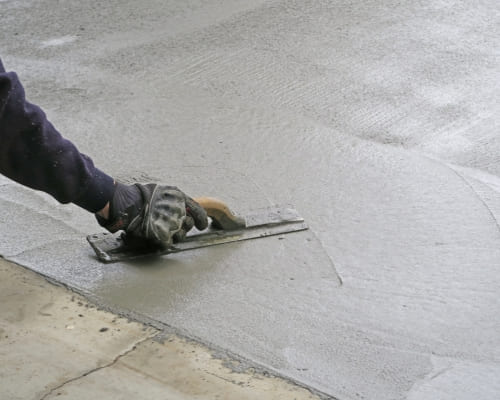
An unsealed or part-sealed driveway is the most reliable way to destroy a tracked sliding gate. Gravel and grit work into the rail, the gate climbs, the rollers flat-spot, and the operator ends up forcing a leaf that is fighting its own track until something gives. Run-off makes it worse, washing material down to the lowest point of the drive, which is frequently where the gate sits. Dust also coats photocell lenses, which is one of the most common reasons a rural gate refuses to close, and it finds its way into any control enclosure that is not properly sealed. The practical answers are a cantilever leaf wherever the surface will not stay clean, weather-sealed control boxes rather than the cheapest option, photocells sited where they can be wiped without a ladder, and rail clearing as a standard part of every service rather than an occasional job. Where a tracked gate is genuinely wanted, a sealed concrete apron at the gate line only, rather than the whole driveway, is often the economical compromise.
Posts and footings in rural ground
The posts carry everything, and rural ground is less forgiving than a suburban slab. A cantilever leaf loads its posts as a lever rather than a weight, so footings are sized for a bending moment and go substantially deeper and wider than people expect. Parts of the Penrith district sit on reactive clay that swells and shrinks seasonally, and a footing sized for stable ground will let a post lean a little each year until a sliding gate runs high at the far end or a pair of leaves no longer meets. Tree roots, old fill and rock all turn up on these blocks and are dealt with at the time rather than worked around. This is the one element that cannot be corrected later without digging it out, so it is not where a quote should be trimmed.
Stock, horses and gates that stay shut
On a horse property or a block running stock the gate has a second job: keeping animals in. That changes several choices. The infill is specified so a hoof or a leg cannot pass through or become trapped, which rules out widely spaced horizontal rails at low level. The gate has to latch positively rather than rely on the operator to hold position, so a drop bolt into a ground stop or a mechanical lock is specified where stock press against it. An auto-close timer matters more here than anywhere, because a gate left open by a delivery driver is a loose horse. And the leaf is built to take being leaned on, which is one of the clearer arguments for steel on a stock entry.
Why choose us in Mulgoa
Gate Motors and Openers for a Mulgoa Entry, Including Solar
The operator decides whether a rural installation lasts, and it is specified against measured gate mass, leaf length, wind load and a realistic daily cycle count rather than the gate's width. On a long heavy leaf every one of those numbers is larger than on a suburban gate, and an operator chosen on span alone is the most common reason a rural gate is back on the repair list.
A sliding gate operator drives a toothed rack along the leaf through a pinion, which is the most robust arrangement available: the drive is positive, the load path short, and the rack a replaceable wearing part. The mesh between rack and pinion is the adjustment that decides its life, and soft start and soft stop remove the shock load that would otherwise destroy rack teeth and gearboxes on a leaf this size. On a long leaf the operator is also chosen for a higher duty rating than the cycle count alone suggests, because moving more mass puts more heat into the motor per cycle. Swing gates run on a linear ram, or an articulated arm where a thick pier leaves a ram no room to travel. Full sizing detail is on the gate automation and motors page, and automating an existing manual rural gate on the gate automation retrofit page.
Panel sizing, sun hours and shading
On a Mulgoa block the gate is frequently a few hundred metres from the house, and trenching a cable that distance through established landscaping, across a driveway and around services routinely costs more than an array and a battery. A solar gate is a standard low-voltage operator running from a battery that a panel keeps charged, so it behaves exactly as a mains gate does, and it avoids running mains to an unattended gate in a paddock. The sizing is arithmetic rather than optimism: the daily draw follows from the real cycle count and the current a long leaf demands, the battery is chosen with reserve for several overcast days rather than one, and the panel is sized to the usable sun hours of the shortest days of the year rather than the annual average. Shading is checked on site and projected forward, because a panel under a tree that was small at installation is the most common reason a solar gate worked for two years and then did not.
Battery banks and the manual release
The battery is the consumable in a solar installation and the part most often undersized to hit a price. It is sized with genuine reserve, because a bank that just copes in summer will fail every winter, and it is load-tested at each service rather than merely voltage-checked, since a battery can read correct and still collapse under the current a motor draws. On a mains entry a backup battery is a sensible default on acreage, where an outage and a single long driveway combine badly. Every gate also leaves with its mechanical release fitted and demonstrated, so it can be moved by hand whatever has happened to the power.
Gate intercoms for a long Mulgoa driveway
When the house is hundreds of metres from the road, nobody can see who has arrived, and that makes an intercom more valuable here than in the suburbs rather than a luxury. A video station at the gate answered on a handset inside or on a phone lets a delivery, a farrier or a visitor be identified and let in without anyone driving down. The practical constraint is the link: a wired run in conduit is the reliable option and is laid while the trench for power is open, which is the cheapest moment it will ever be. Where a cable is impractical, a wireless link is tested at the actual gate position before it is quoted rather than assumed from a specification, because distance, a rise in the ground and established trees all defeat the advertised range. An exit loop in the driveway means leaving needs no credential at all. Hardware detail is on the intercoms and access control page.
SERVICES WE OFFER IN Mulgoa
Why Mulgoa Property Owners Choose Penrith Automatic Gates
A rural gate is a bigger, heavier, more remote machine than a suburban one, and the quotes that go wrong in this valley are the ones that priced a suburban gate and scaled it up. Being direct about where the money has to go is more useful than a pitch.
Three things earn their cost on a Mulgoa entry. The posts and footings come first, because a long leaf and a cantilever counterbalance load the posts as a lever, rural ground is less forgiving than a slab, and a post that leans takes the gate out of level and then destroys hinges, carriage and operator in that order. The operator comes second, sized for a long heavy leaf and a real cycle count rather than for the span, since a motor forcing a gate it was not chosen for burns out in its second year. And the power arrangement comes third, whether a trench or a properly sized array and battery, because a marginal solar system fails in winter rain rather than on the day it is commissioned. Where a simpler arrangement will do the job for less, that is said rather than talked around.
Penrith Automatic Gates has been building, automating and repairing gates across Penrith and Western Sydney for more than twelve years, with over five hundred jobs completed, and holds twenty million dollars in public liability cover under ABN 56 573 390 615. Acreage and rural entries are a regular part of the workload rather than an occasional job, which is what makes a shading check, a raked bottom rail and a sealed apron at the gate line routine here rather than afterthoughts.
Three things follow. Quotes are itemised and written, so the gate, the automation, the posts and footings, the access control and any power or site works appear as separate lines and can be staged against a budget. The gate, the operator and the entry hardware are specified together by one trade, which avoids the common outcome where a fabricator builds a leaf too heavy for the operator a separate installer then fits, and on a long rural leaf that mismatch is both more likely and more expensive. And the same team that installs a gate services and repairs it afterwards, on any brand, which matters where gravel, dust and stock are constant. Mains electrical work is carried out by a licensed electrician as a separate trade.
Why choose us in Mulgoa
Mulgoa Covered, Mulgoa Road to the Valley Lanes
Work in Mulgoa runs the length of the valley, from the properties along Mulgoa Road and Littlefields Road through to the quieter lanes further in. The jobs are recognisably rural throughout: wide openings, long driveways, unsealed or part-sealed surfaces, and a house set well back from the road.
Where the valley varies is in scale and slope. The larger landholdings and horse properties want wide cantilever or sliding leaves, stock-proof infills, positive latching and frequently a solar supply, because the entry is a long way from the switchboard. The smaller acreage blocks closer to the road are often more level at the gate line with power within reach, and a tracked slider or even a swing gate is perfectly sound there. Around the historic church precinct the frontages are more formal, and an ornamental steel leaf matched to established brick piers is usually what suits rather than a contemporary slat gate. None of that is a template; it is what each entry asks for once it has been measured.
From Mulgoa the usual working radius takes in Wallacia, Regentville, Glenmore Park and Luddenham, and back through Orchard Hills toward the Penrith centre, with the Nepean River and the surrounding rural belt all inside the patch. The Great Western Highway and the M4 keep the run short, which is the practical reason a call-out to a stuck gate at the far end of a valley driveway is still a same-day proposition.
Matching pedestrian and side gates are built at the same time where a property wants one, and on a rural block there is a specific argument for it beyond appearance: a separate gate for people on foot keeps visitors and deliveries out of the path of a long, heavy vehicle gate, and on a stock property it gives a way in and out that does not involve opening the main entry at all. Both leaves are made together and powder coated in the same batch, which is the only way to get the infill spacing, section sizes and colour to line up exactly. Those are covered on the side gates page.
Automatic Gates Services we offer In Mulgoa
Tracked, cantilever and telescopic sliding gates for wide or sloping entries, with the rail, rollers and operator sized to the leaf.
Single and double-leaf swing gates for level entries with room for the arc, on rams, articulated arms or underground operators.
Automatic and electric driveway gates sized to the measured entry, in aluminium, steel or timber-look infills.
Operators sized to measured gate mass, leaf length and duty cycle for sliding, swing and underground gates, plus solar for rural entries.
An existing manual gate checked, corrected and automated, with the operator sized to the leaf rather than to its width.
Video and audio intercoms, keypads, cards, fobs and app control, wired or wireless and integrated with the gate operator.
Powder-coated aluminium slat, driveway, sliding and side gates that will not rust, built light so the operator and hinges wear less.
Steel and wrought-iron driveway, side and heritage gates welded to the opening, hot-dip galvanised and powder coated.
Gates welded to the measured opening in steel or aluminium, finished, automated and installed by the same workshop.
Pedestrian, garden and pool-compliant side gates matched to the driveway gate, with hardware specified for the cycle count.
Heavy-duty sliding, cantilever and boom gates for Western Sydney work sites, with the operator sized to the real duty cycle.
Automatic gate and operator faults diagnosed on site before anything is quoted, on any brand, plus servicing and emergency call-outs.
Automatic Gates In Mulgoa
FREQUENTLY ASKED QUESTIONS
Everything you need to know about our Automatic Gates In Mulgoa
Can you build large driveway gates for Mulgoa properties?
Yes, and width is the usual reason a Mulgoa entry needs a particular configuration. A swing leaf is a cantilever hinged at one end, so every extra metre multiplies the load on the hinge, and past a moderate span a single leaf sags while a double leaf means two operators and sequencing. A sliding leaf closes the same opening with one operator and one drive and needs no clear arc, which is why it suits a wide rural frontage. The frame section is stepped up and bracing added as the leaf gets longer, so span feeds directly into gate mass and operator class.
Can a gate be automated on a sloping Mulgoa driveway?
Yes, and the slope usually points to a cantilever leaf. A cantilever is carried entirely on posts set back from the opening and crosses the driveway with nothing touching the ground, so it is indifferent to the ground profile and to anything on the surface. A tracked sliding gate also ignores whatever the driveway does beyond the gate line, though its rail still needs sound, reasonably level concrete at the gate line itself. A swing gate is the one ruled out by slope, because the leaf cannot travel through an arc over ground that rises or falls.
What is the best material for a rural gate in Mulgoa?
Aluminium for most entries, steel where the span is widest or the frontage is formal. Aluminium weighs roughly a third of steel for the same section, so a lighter leaf loads the carriage, posts and operator far less, needs a smaller motor and a smaller solar array, and never rusts, which matters on a gate at the end of a long driveway nobody inspects. Steel is stiffer for the widest spans, resists impact from vehicles and stock, carries ornamental work and can be repaired by welding for its whole life, provided it is hot-dip galvanised before coating. Timber is built as battens on a metal frame, never as a timber frame.
Can a Mulgoa gate run on solar power?
Yes, and on a block where the gate is a few hundred metres from the switchboard it is usually cheaper than trenching rather than merely greener. A solar gate is a standard low-voltage operator running from a battery that a panel keeps charged, so it behaves exactly as a mains gate does. The sizing is arithmetic: the daily draw follows from the real cycle count and the current a long leaf demands, the battery is chosen with reserve for several overcast days rather than one, and the panel is sized to the usable sun hours of the shortest days of the year. Shading is checked and projected forward, since a panel under a tree that was small at installation is the most common cause of later failure.
How much should be budgeted for an automatic gate in Mulgoa?
No figure is honest before the entry is measured, and on acreage the groundwork and power vary far more than the gate. From least to most: a swing leaf on a narrow level entry; a tracked sliding gate where the apron at the gate line is sealed and sound; a cantilever leaf, where the counterbalance and the deeper, wider footings add most of the difference; a wide cantilever with a screening infill, which forces heavier posts again; and at the top any of those on a remote entry needing a solar array and battery sized to the cycle count. The surface at the gate line and the distance to power move a Mulgoa quote most.
Do you repair existing gates in Mulgoa?
Yes, on any brand, including gates installed by someone else. On acreage the diagnosis usually starts with power rather than the motor: a flat battery bank on a solar installation is the most common cause here, and it most often traces back to a panel shaded by growth that was not there when the gate went in, which is fixed by moving the panel rather than replacing the operator. Beyond that, control boards fail from water ingress and from insects nesting on the board, both more common on a rural entry than owners expect, and dust on a photocell lens is a frequent reason a gate refuses to close.
TESTIMONIALS
What Mulgoa Homeowners Say About Us
Request A Free Quote
GET A FREE QUOTE
BUSINESS
SERVICES
OPERATING HOURS
Sun: 7:00am - 9:00pm
Mon: 7:00am - 9:00pm
Tue: 7:00am - 9:00pm
Wed: 7:00am - 9:00pm
Thu: 7:00am - 9:00pm
Fri: 7:00am - 9:00pm
Sat: 7:00am - 9:00pm